Spiritual Wall Tapestries: Transforming Modern Decor
Intro
In a world where individual expression and personal beliefs blend within our living spaces, spiritual wall tapestries emerge as unique adornments that carry their own stories and meanings. These textiles not only add texture and color to a room but also serve as a canvas for spiritual reflection and artistic depth. Each tapestry reflects the intersection of culture, artistry, and spirituality, making them an essential piece in modern decor.
This exploration aims to peel back the layers of significance behind these pieces, connecting their historical roots to their contemporary appeal. Through this journey, we will uncover how spiritual wall tapestries transcend mere decoration, acting as conduits for understanding and personal interpretation. Whether you’re an aesthetic enthusiast craving for an eye-catching centerpiece or someone on a quest for deeper meaning, the world of spiritual tapestries has much to offer.
We'll delve into various aspects including their origins, how they've transformed the aesthetic landscape of our homes, and practical tips on how to integrate these textiles effectively into your decor. By the end of our exploration, you will possess not only insights about various tapestry designs but also knowledge about caring for and styling them in a way that complements your unique sense of style.
Let's embark on this tapestry journey and see how these woven artworks can elevate our spaces and spirits.
Prelims to Wall Tapestries
Wall tapestries have woven their way into the fabric of home decor for centuries, embodying a tapestry of traditions, artistry, and personal expression. In today’s world, these textile artworks have transcended their decorative role to become significant elements of emotional and spiritual resonance within living spaces. This article explores why wall tapestries are not merely adornments but also mediums for storytelling, spirituality, and aesthetic pleasure.
When one contemplates the essence of wall tapestries, several elements come to mind. First, their historical significance adds a rich layer of appreciation. In era’s past, tapestries adorned the walls of castles and grand homes, often weaving tales of mythology or family heritage. The act of displaying these textiles was not just about decoration; it was often a reflection of the owner’s status and tastes.
Second, the modern relevance of wall tapestries in home design is striking. With a resurgence of interest in sustainability and artisanal craftsmanship, many are turning to these pieces for their unique ability to blend artistry with spirituality. They are seen not only as decorative items but as integral components that enhance the psychological and physical ambiance of a space.
Furthermore, the contemporary practice of choosing spiritual themes in tapestries supports an increasing desire for mindfulness and personal reflection in living areas. This desire has paved the way for diverse motifs, patterns, and colors that resonate with individual spiritual journeys and beliefs.
Thus, an understanding of wall tapestries, their history, evolution, and significance in today's decor becomes fundamental for anyone keen on enhancing their space with intention. This exploration is not just about beautifying homes; it’s about creating a sanctuary that reflects one’s inner self.
Definition and Historical Context
Wall tapestries can be defined as large pieces of textile art designed to hang on walls, often woven with intricate patterns and motifs. Historically, these textiles serve a dual purpose: they function as decorative art and practical insulation against cold walls in ancient structures. The practice dates back to the times of the Egyptians and continues through medieval Europe, where they depicted stories through elaborate threads.
Throughout the ages, different cultures have embraced tapestries, each weaving their own tale through distinct techniques. The Flemish tapestries of the Renaissance, for example, became widely collectible due to their craftsmanship, often incorporating themes from myth and religion.
In this section, we unearth these historical roots. Understanding the origins not only enriches our appreciation for these textiles but also informs their symbolic importance in contemporary decor.
The Evolution of Tapestry Art
As society evolved, so did the forms and functions of tapestries. From the baroque extravagance seen in the tapestries of the 17th century to the more minimalist designs popular today, the evolution mirrors technological and artistic changes as well as shifts in societal values.
The Industrial Revolution brought about mass production of textiles, making tapestries more accessible. This accessibility led to a democratization of art, where individuals could incorporate tapestry art into their homes without the necessity of wealth that marked earlier generations.
In modern times, the rise of digital printing technology has further transformed tapestry art, allowing for experimentation with colors and designs that would have been unimaginable in earlier eras. Artists now create tapestries that draw from global inspirations, touching on spirituality, nature, and the abstract, enriching the decorative landscape of homes.
"Tapestries are threads of history and culture woven together, forming connections between the past and present in our living spaces."
Wall tapestries, therefore, continue to serve as vessels for personal expression and spiritual reflection. As we delve deeper into the concept of spiritual wall tapestries in the following sections, we will examine their roles, significances, and choices within the modern decor.
Through this exploration, we invite fashion enthusiasts and retail professionals alike to rediscover the power of tapestries in crafting spaces that truly resonate with personal narratives and spiritual vitality.
Understanding Spirituality in Decor
Spirituality in decor resonates with individuals on levels beyond mere aesthetic appeal. This concept is woven into the essence of home design, influencing not only how spaces look but also how they feel. Wall tapestries, as vessels of artistic and spiritual expression, serve to manifest this interplay. In our fast-paced world, there is growing recognition of the role personal spaces play in fostering a sense of tranquility, connection, and introspection. Recognizing spirituality within decor helps to craft environments that echo one's values and beliefs.
The Role of Spirituality in Home Design
Home design rooted in spirituality transcends traditional approaches. It emphasizes creating a haven that reflects inner peace. When selecting wall tapestries, choosing pieces that resonate personally can transform a bland wall into a vibrant source of inspiration. The imagery used in these tapestries—be it mandalas, nature scenes, or cultural motifs—holds significance that is unique to individual interpretation.
Through careful selection, home designers embark on an artistic journey that invites mindful contemplation into daily life. When a tapestry adorned with symbols of strength, for instance, is hung in a living room or meditation corner, it becomes more than just fabric; it becomes a constant reminder of personal power.
- Reflective Spaces: Areas designed for relaxation, such as reading nooks or meditation corners, benefit significantly from the inclusion of spiritual art.
- Emotional Anchor: A tapestry can symbolize hope, love, or tranquility, often acting as an emotional anchor in times of stress.
Creating spaces that foster well-being hinges on integrating such elements intentionally. By doing so, homeowners not only beautify their environment but also craft it into a narrative of their life’s journey.
How Decor Influences Mental Well-being
The relationship between decor and mental well-being is noteworthy. Personal surroundings play a crucial role in shaping mood and mindset. Scientific studies, such as those cited by the American Psychological Association, suggest that visual stimuli can elicit emotional responses, influencing overall mental health.
Wall tapestries, with their large-scale visuals and textures, can evoke feelings of warmth, comfort, or even nostalgia. For example:
- Nature-inspired Tapestries: Patterns that include forests, oceans, or mountains can evoke a sense of calm and connection to nature.
- Cultural Symbolism: Tapestries reflecting one’s heritage or beliefs can instill a sense of belonging and pride, reducing anxiety and promoting positive self-esteem.
Additionally, spending time in spaces adorned with meaningful decor fosters mindfulness. This is akin to the principle of feng shui, where careful arrangement of elements creates a harmonious flow of energy. Engaging with one’s environment can lead to improved focus, creativity, and emotional grounding.
"The spaces we inhabit have the power to shape our experiences, influencing how we feel in the very essence of our being."
Ultimately, the careful selection and placement of spiritual wall tapestries can create an atmosphere that nurtures the mind and spirit, enriching daily life with moments of contemplation and peace.
Symbolism in Spiritual Wall Tapestries
The relevance of symbolism in spiritual wall tapestries extends far beyond mere decoration; it acts as a bridge linking the physical space of our homes to the deeper realms of our consciousness. These vibrant textile artworks serve as visual cues that not only beautify a room but also infuse it with layers of meaning. The symbols woven into these tapestries echo age-old traditions, resonate with personal experiences, and invite contemplation.
In modern decor, wall tapestries adorned with spiritual symbolism can create atmospheres that promote serenity and introspection. By offering a reflection of one’s beliefs and aspirations, these pieces create a dialogue between the occupant and the artwork. Hence, they become personal artifacts, each telling a story unique to the individual and their spiritual journey. For fashion enthusiasts and retail professionals alike, understanding the intricate symbolism found in these tapestries opens a pathway to a more profound appreciation of their aesthetic value.
Common Symbols and Their Meanings
Many symbols appear frequently in spiritual wall tapestries, each carrying specific meanings that can resonate deeply with viewers. Here are some notable examples:
- Tree of Life: Representing interconnectedness and growth, this symbol speaks to the relationship between all forms of life. A tapestry featuring this design may inspire thoughts on personal development and the nurturing of spirit.
- Mandala: Often used in spiritual practices for meditation, its intricate patterns symbolize the universe and the cycle of life. Hanging a mandala tapestry can serve as a reminder of one’s own place within this vast expanse.
- Lotus Flower: In various cultures, this flower signifies purity and rebirth. A lotus tapestry may invoke feelings of renewal and the pursuit of enlightenment.
- Eye of Horus: This ancient Egyptian symbol stands for protection, health, and rejuvenation. It encourages a focus on physical and spiritual well-being.
Each of these symbols transforms a simple wall covering into a conduit for reflection and deeper understanding. When selecting a tapestry, the meaning behind the design can deeply influence the ambiance of the environment.
Cultural Variations in Symbolism
Spiritual wall tapestries are not merely uniform in their designs; they reflect a plethora of cultural backgrounds and beliefs, each offering unique interpretations. For instance:
- Buddhist Tapestries: These often showcase intricate Buddhist symbols such as stupas or Bodhi leaves, representing paths to enlightenment and mindfulness.
- Native American Tapestries: Featuring symbols like the dreamcatcher, these designs convey principles of protection and guidance, echoing the values of respect for nature and community.
- Celtic Tapestries: Characterized by complex knots and interwoven patterns, these pieces symbolize eternity and the interconnectedness of life.
Understanding these cultural variations allows individuals to appreciate not only the beauty of the tapestries but also the rich histories and philosophies behind them. Embracing the diversity in symbolism can enhance one's personal decor choices, infusing spaces with varied narratives and deeper meanings.
"The symbolism in spiritual wall tapestries serves as a mirror into our aspirations and beliefs, making our spaces not just livable but deeply personal."
Choosing the Right Spiritual Wall Tapestry
Choosing the right spiritual wall tapestry is a significant decision for anyone looking to enhance their living space with a touch of meaning and beauty. These textiles not only bring artistic flair but also serve as symbols of personal beliefs, aspirations, and influences from various cultures. When selected thoughtfully, a tapestry can become a focal point—reflecting one's journey in life or even serving as a daily reminder of deeper insights.
The process of picking a tapestry goes beyond mere aesthetics. It involves understanding the materials, sizes, and color schemes that complement your space and align with the intended emotional or spiritual ambiance. Each aspect plays a crucial role in ensuring that the tapestry not only fits seamlessly in the environment but also resonates on a personal level.
"Art is the most beautiful of all lies; but it is the higher truth that it conveys through color and thread.”
Material Considerations
Materials matter greatly when it comes to wall tapestries. Different fabrics can offer varied textures and visual effects. The most common materials include cotton, silk, wool, and synthetic fibers. Cotton, for instance, is durable and easy to clean, making it a practical choice if you want to incorporate your tapestry in a family space. On the other hand, silk can impart a luxurious feel and vibrant colors, but it requires more delicate care and is sensitive to sunlight.
- Cotton: Versatile and easy to maintain, suitable for everyday settings.
- Silk: Offers a more lustrous and delicate appearance but requires careful handling.
- Wool: Warm and often richer in texture, ideal for cozy or rustic spaces.
- Synthetic fabrics: Can mimic natural materials and offer durability at a lower cost.
Considering how the tapestry will be used is important. If it’s in a high-traffic area or exposed to direct sunlight, you might want something more resilient. The choice of fabric can directly influence not just the look but the longevity of the tapestry.
Size and Scale Appropriateness
Size and scale are often where many people go awry in tapestry selection. An oversized tapestry can overwhelm small spaces, while a minuscule piece can get lost on a vast wall. Proper sizing ensures that the tapestry complements rather than complicates the existing decor. Generally, the tapestry should cover a good percentage of the wall space if it’s intended to stand out.
- For small rooms, smaller tapestries can work well when grouped in sets to create a gallery wall effect.
- Larger spaces may benefit from a statement piece that draws the eye and becomes a conversation starter.
Additionally, consider the tapestry's positioning. Hanging it at eye level creates an inviting atmosphere, ensuring that its details and symbols capture attention. If you have high ceilings, a larger tapestry will help bridge the gap and fill the vertical space elegantly.
Color Schemes and Room Integration
Color plays a fundamental role in decor, having the power to evoke emotions and establish moods. When selecting a tapestry, think about how the colors within the piece can either blend with or enhance your existing color palette.
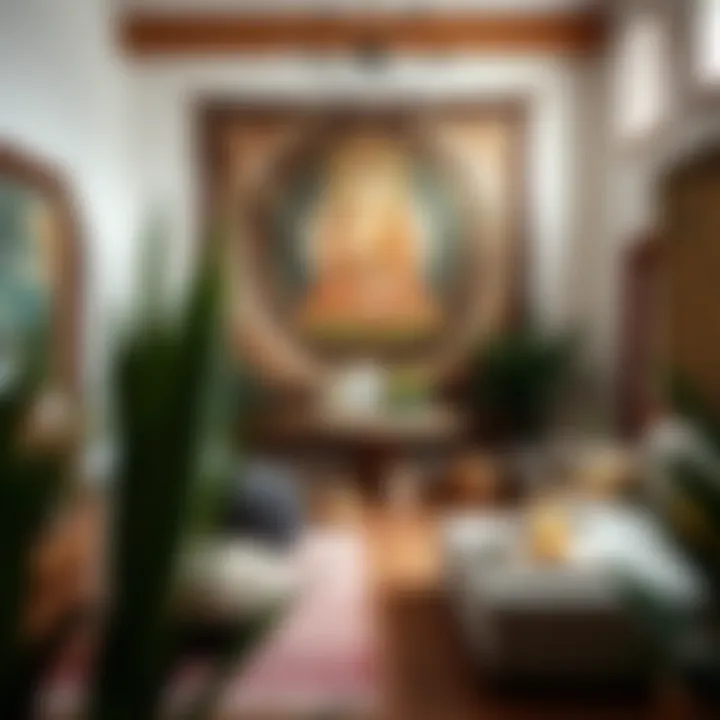
Your chosen tapestry can serve as an accent piece or a harmonious element within the room. Consider these dynamic color approaches:
- Monochromatic: Subtle variations of a single color can add depth without overwhelming the eye.
- Contrasting: Bold colors can energize a room, creating visual interest and drama.
- Complementary: Using colors opposite each other on the color wheel can create a balanced, appealing look.
Moreover, take into account the room’s overall aesthetic. A zen-inspired space may benefit from earthy tones and subtle designs, while bohemian environments often celebrate vibrant colors and intricate patterns. Ultimately, a well-chosen tapestry will tie the room together and resonate with the spirit and vibe of the inhabitants.
Displaying Wall Tapestries
When it comes to personalizing a space, few elements can match the statement made by wall tapestries. Not only do they serve as striking focal points in a room, but they also carry significant emotional and spiritual weight. Displaying spiritual wall tapestries can transform an ordinary wall into a vibrant expression of one's beliefs and values. It’s an artful way of integrating spirituality into daily life, fostering a sense of peace and introspection.
Tapestries can speak to the soul, making them a unique conversation starter. With the right placement and complementary elements, they enhance the overall aesthetic of a room. As one welcomes guests, a well-placed tapestry can provide a glimpse into the homeowner's spiritual journey, making it more than just decor—it becomes an extension of one’s identity.
Placement Strategies for Impact
Finding the right spot for a tapestry can be the difference between it merely hanging on a wall and it commanding attention. Here are some strategies to consider:
- Eye Level Positioning: Hanging the tapestry at eye level makes it accessible and engaging for viewers. This way, intricate details and colors become more appreciated, creating a welcoming atmosphere in the room.
- Over Furniture: Placing the tapestry above a couch or bed draws the eye upwards, accentuating height in the room. This works particularly well with larger tapestries that can fill a significant wall space.
- Corner Displays: For those who wish to create a cozy nook, consider a corner display. A tapestry can define that space, creating a serene ambiance suitable for meditation or reading.
- Layering with Other Art: Combining tapestries with paintings or photographs can create an eclectic art gallery feel. When arranged thoughtfully, they can complement each other visually and conceptually.
By taking these considerations into account, the tapestry not only decorates but also communicates meaning.
Complementary Decor Elements
To enhance the vitality of a spiritual tapestry, selecting complementary decor elements is crucial. Here are some ideas:
- Framing the Tapestry: Consider framing the tapestry or mounting it on a solid backdrop. A wooden frame can lend a sense of permanence while enhancing the tapestry’s colors.
- Textured Accents: Incorporate elements like pillows or throws that echo the colors or motifs found in the tapestry. This creates a cohesive look that ties the room together.
- Natural Elements: Integrating plants can introduce an organic touch. Greenery can soften the visual impact of a tapestry, making a space feel more inviting and alive.
- Sculptural Pieces: Add three-dimensional decor, such as sculptures or figurines, to create a layered space. This can break up flat surfaces and make the area feel more dynamic.
Overall, crafting a harmonious decor environment around your tapestry not only highlights its beauty but also elevates the room’s energy and spirit.
Remember, a well-displayed tapestry is more than just decoration; it’s a manifestation of personal beliefs and aesthetics that encourages introspection and connection.
By understanding the nuances of display and integration, spiritual wall tapestries can be transformed into the heart of any living space, enriching one’s everyday life with depth and purpose.
Caring for Spiritual Wall Tapestries
Maintaining spiritual wall tapestries is essential for ensuring they remain vibrant and relevant in your living space. Beyond merely being decorative, these pieces hold emotional value and serve as focal points for personal reflection and mindfulness. Caring for them is not just about cleanliness; it’s a way to honor the craftsmanship and significance embedded within the fibers. When properly cared for, these textiles can continue to inspire and uplift the atmosphere of a home for many years.
Cleaning and Maintenance Tips
The approach to cleaning spiritual wall tapestries varies greatly depending on materials and the tapestry's age. To preserve the intricate designs and colors, it’s advisable to use gentle methods. Here are some effective tips:
- Dust Regularly: Use a soft, dry cloth or a vacuum with a low setting to remove dust gently. This prevents dust build-up and preserves the tapestry’s vibrancy.
- Spot Clean Stains: For stubborn stains, a mixture of mild soap and water applied with a soft cloth can often work wonders. Always test a small area first to ensure the colors won't run.
- Avoid Direct Sunlight: Ultraviolet rays can fade colors, so consider positioning your tapestry away from direct sunlight. If that’s not possible, using UV-filtering curtains can be useful.
- Professional Cleaning: If your tapestry is particularly valuable or large, don’t hesitate to seek professional cleaning services. They have the expertise and tools to care for delicate materials effectively.
Regular cleaning not only maintains aesthetics but also extracts emotional resonance, keeping the tapestry’s purpose alive in your space.
Storage Considerations
When it comes to storage, the conditions dictate how well your tapestry ages. Improper storage can lead to mold, mildew, or damage. Here are some key considerations:
- Roll, Don’t Fold: When storing, roll the tapestry rather than folding it. This prevents creases, which can become permanent over time.
- Use Acid-Free Materials: Wrap the tapestry in acid-free paper or fabric to shield it from environmental factors. This also helps in maintaining color and texture.
- Keep in a Dry Place: Store your tapestry in a cool, dry environment to avoid moisture that could lead to mildew or mold growth. Avoid attics or basements unless they are climate controlled.
- Avoid Plastic Bags: While it may seem convenient, plastic bags can trap moisture and lead to deterioration. Stick to breathable materials for long-term storage.
Following these guidelines ensures your spiritual tapestries remain not only visually striking but also a true testament to artistry and the personal meanings they hold within your home.
The Impact of Spiritual Tapestries on Personal Spaces
In modern decor, spiritual tapestries go beyond mere wall adornments; they hold the potential to transform personal spaces into sanctuaries of tranquility and introspection. Their artful designs, steeped in symbolic meanings, can resonate on deeply personal levels, guiding individuals through their spiritual journeys while simultaneously enhancing the aesthetic appeal of their homes.
A tapestry hung on the wall can invoke a sense of calmness and peace, like a soft whisper in the hustle and bustle of daily life. Whether it’s a depiction of a serene landscape, a mystical mandala, or a representation of cultural mythology, the tapestry serves as a focal point that draws the eye and invites contemplation. This impact goes far beyond visuals; it extends to the influencing energies and atmospheres in our surroundings.
Considerations surrounding the placement and selection of spiritual wall tapestries are crucial. Selecting the right piece involves an understanding of personal preferences but also an acknowledgment of the space it occupies. Emotional resonance with the artwork can cultivate a profound connection, making it an integral part of one's living environment.
Creating a Personal Spiritual Sanctuary
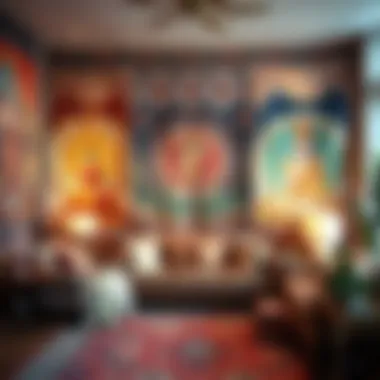
Creating a personal sanctuary using spiritual wall tapestries is like setting up one’s own little world—a retreat where one can recharge and reflect. Placing a tapestry in a bedroom, for instance, can transform it into a haven for rest and peace.
- Visual Appeal: A carefully chosen tapestry can set the mood of the space. Bright colors can energize, while muted tones can calm. Select a tapestry that resonates with your inner self.
- Symbolic Connection: Whether it’s a representation of a personal belief or a cultural icon, finding a tapestry that aligns with your values fosters a sense of belonging and comfort.
- Layered Textures: Incorporating fabrics and materials that harmonize with the tapestry can amplify its effect. Layering pillows, throws, and rugs of corresponding colors or textures achieves coherence.
To truly manifest a personal sanctuary, consider adding other elements such as candles, plants, or crystals that can contribute to your individual journey towards serenity.
"A tapestry is not just an image; it's a portal to the deeper self."
Incorporating Tapestries in Meditation Spaces
Incorporating spiritual tapestries into meditation spaces can greatly enhance the experience of mindfulness and centering. Tapestries can serve as a non-verbal anchor that grounds practitioners, helping to facilitate higher states of awareness.
- Calm Environment: The right tapestry can soften harsh walls and create a calm visual field. Selecting images that evoke serenity, such as nature scenes or abstract designs, is crucial in this space.
- Alignment with Practice: Opt for tapestries that embody the essence of your practice, whether it’s yoga, meditation, or mindfulness. Pieces that depict symbols of enlightenment or tranquility can deepen one’s focus during sessions.
- Practical Arrangement: Position the tapestry to be sighted during meditation sessions. If it’s behind where you sit, it can remind you of your intentions and aspirations, serving as a guide during inner exploration.
Thus, by harmonizing wall tapestries with the personal quest for spirituality, individuals create spaces filled with intention, purpose, and clarity. The impact of spiritual tapestries on personal spaces is profound; they are more than decorative items—they are companions on life’s journey.
Trends in Spiritual Wall Tapestry Designs
In contemporary interior design, the role of spiritual wall tapestries extends beyond mere decoration; they encapsulate a lifestyle, reflecting personal beliefs and aesthetic values. The trends in this area undoubtedly mirror larger societal shifts towards mindfulness and self-expression. Several elements define the trends today, from design to production methods.
Contemporary Influences in Tapestry Art
Modern tapestry art is a melting pot of traditional techniques and contemporary sensibilities. Influences from diverse cultures have coalesced, yielding a fresh avenue for personal expression. For instance, artists might blend vintage patterns inspired by ancient civilizations with bright colors typical of today's palette. This blending isn't merely aesthetic; it tells a story of cultural coexistence and innovation.
- Geometric Designs: Many contemporary tapestries feature bold geometric patterns, making them striking focal points in rooms. These shapes can symbolize harmony or balance, resonating deeply with spiritual seekers.
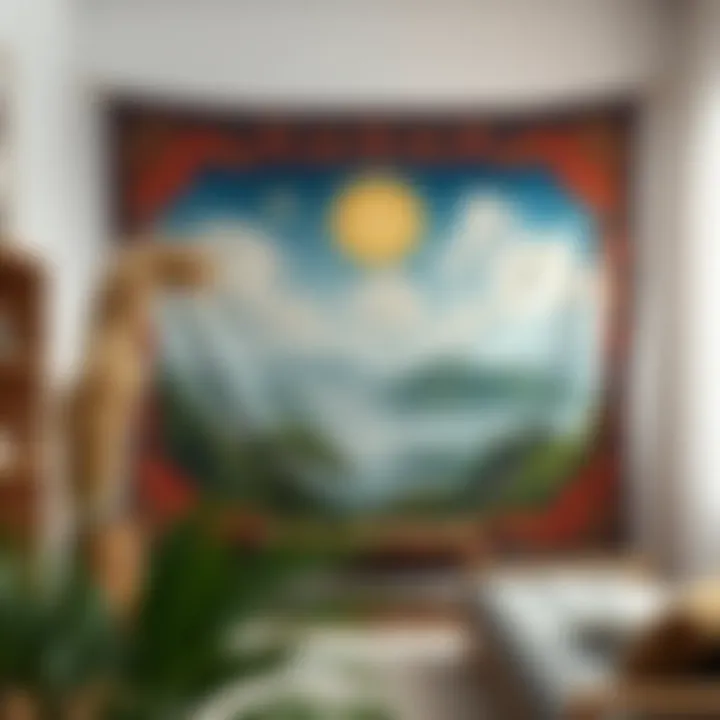
- Organic Motifs: Natural elements like trees, stones, or the sun often find their way into modern designs. They evoke a sense of grounding and connection to nature, offering a serene vibe to living spaces.
- Minimalist Aesthetics: Less truly is more for many modern decorators. Simplistic designs that focus on a single, powerful image can foster clarity of thought and enhance meditation experiences.
These trends not only cater to visual preferences but also deliver a message about one's personal journey. They invite viewers to explore deeper meanings behind each intricate weave.
Sustainable Practices in Tapestry Production
As awareness of environmental issues grows, the tapestry industry is increasingly turning to sustainable production methods. This shift is crucial for anyone invested in both aesthetics and ethics. Artists and manufacturers are seeking ways to lessen their environmental footprint, shifting the narrative around materials and practices.
- Eco-friendly Materials: Many creators are choosing organic cotton, bamboo fibers, and recycled polyester in their pieces. This not only reduces harm to the planet but encourages sustainability in consumer choices, promoting a circular economy.
- Local Production: Moving production closer to home minimizes transportation emissions. Local artisans are becoming more sought after, as their works often fuse traditional techniques with modern flair, supporting local economies.
- Waste Reduction: Innovations in production techniques aim to decrease fabric waste. This includes using digital printing technologies that allow for more precise cuts and less leftover material.
"When we invest in sustainable tapestry designs, we are not just adorning our walls; we are supporting a healthier planet and embracing a lifestyle that values quality over quantity."
The intersection of aesthetics and sustainability is becoming a priority for consumers. Those who choose art that reflects their values contribute positively to the environment while enriching their living spaces.
Reflecting on these trends helps us appreciate how spiritual wall tapestries have evolved. Each tapestry narrates a story—of culture, sustainability, and personal expression—making them timeless pieces in modern decor.
The Future of Spiritual Tapestries
As society progresses, so does the art of tapestry-making. Spiritual tapestries has become an intriguing intersection between traditional craftsmanship and modern sensibilities. The relevance of this topic in today's decor landscape cannot be understated, as these pieces offer not just visual appeal, but also a means for individuals to express their own spirituality within their surroundings. The key elements to consider here are the innovative techniques employed, the materials that are emerging, and how technology plays a crucial role in the design and production of these textiles.
Innovative Techniques and Materials
In recent years, the tapestry industry has seen a flourish of new ideas and methods that enhance both the aesthetic and functional qualities of spiritual wall textiles. Modern artisans are increasingly experimenting with a variety of materials, such as recycled fibers, sustainable fabrics, and even metallic threads, to create tapestries that are not only environmentally friendly but also strikingly unique. This shift aligns with the broader trend of conscious consumerism, where buyers prefer ethically sourced products.
Additionally, we can note the resurgence of traditional weaving techniques married with contemporary designs. For instance, the combination of ikat dyeing with digital printing allows for vibrant colors and intricate patterns that speak to both heritage and modernity. Artisans, like those from the region of Oaxaca, have begun utilizing local inspiration, blending ancient motifs with modern themes. Each tapestry tells a story that resonates with viewers on multiple levels.
- Eco-friendly Materials:
- Techniques:
- Hemp fibers
- Organic cotton
- Tencel made from eucalyptus
- Double weave for depth
- Jacquard weaving for intricate designs
- Hand-embroidery for a personal touch
The Role of Technology in Tapestry Creation
Technology has truly revolutionized the tapestry-making process. The advent of digital printing has empowered designers to experiment with colors, patterns, and sizes that were previously unattainable. High-resolution images can now be turned into stunning wall art with pinpoint accuracy. This not only reduces production time but also minimizes waste – an essential aspect for sustainable decor.
Moreover, the rise of software that simulates weaving patterns allows artists to try out designs without using materials. This can be seen as a game-changer, as it encourages artists to push boundaries while preserving the essence of spirituality.
"In the future, the fusion of age-old traditions with cutting-edge technology will allow for even greater expression of identity and spirituality in decor."
Additionally, online platforms have made it easy for artists to share their work globally, thus expanding the market for spiritual tapestries. Vintage designs can be reimagined through modern lens, allowing for a resurgence of cultural references in a contemporary context.
As we look ahead, it becomes clear that spiritual wall tapestries are not just a passing trend; they are poised to become an integral part of our living spaces, enriching our environments as we navigate personal beliefs and artistic expressions. Embracing both innovation and tradition, the future of spiritual tapestries is bright, inviting us all to explore a realm of creativity and spiritual connection.